ÖAMTC Smart predictions for roadside assistance
Mobility Services
ÖAMTC
Workflow Intelligence,
Data Science,
Servce Design,
Customer Experience
Waiting time is a key driver of customer satisfaction, especially in high-stress situations like a breakdown. This use case shows how we improved a critical part of the service process through targeted digitalization by focusing on the point of highest impact.
With Workflow Intelligence, we delivered a solution that integrates seamlessly into existing operations and creates measurable value for members, employees, and decision-making.
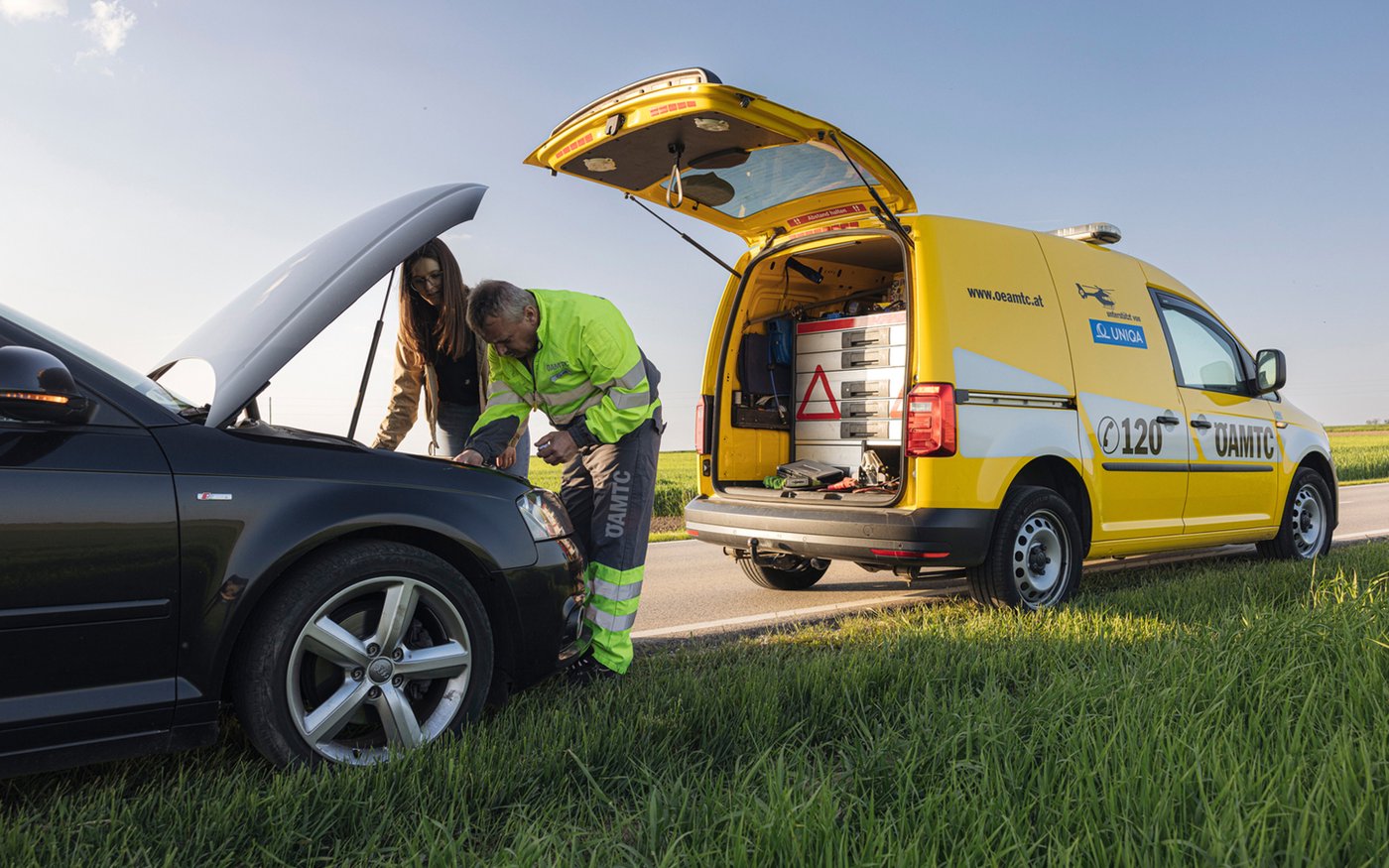
The challenge
At ÖAMTC, waiting time estimates were manually entered in the roadside assistance dispatch system. This created additional workload for employees and limited accuracy in predicting arrival times.
The goal was clear: reduce manual effort, increase precision, and provide more reliable information to both employees and members.
Workflow Intelligence in action
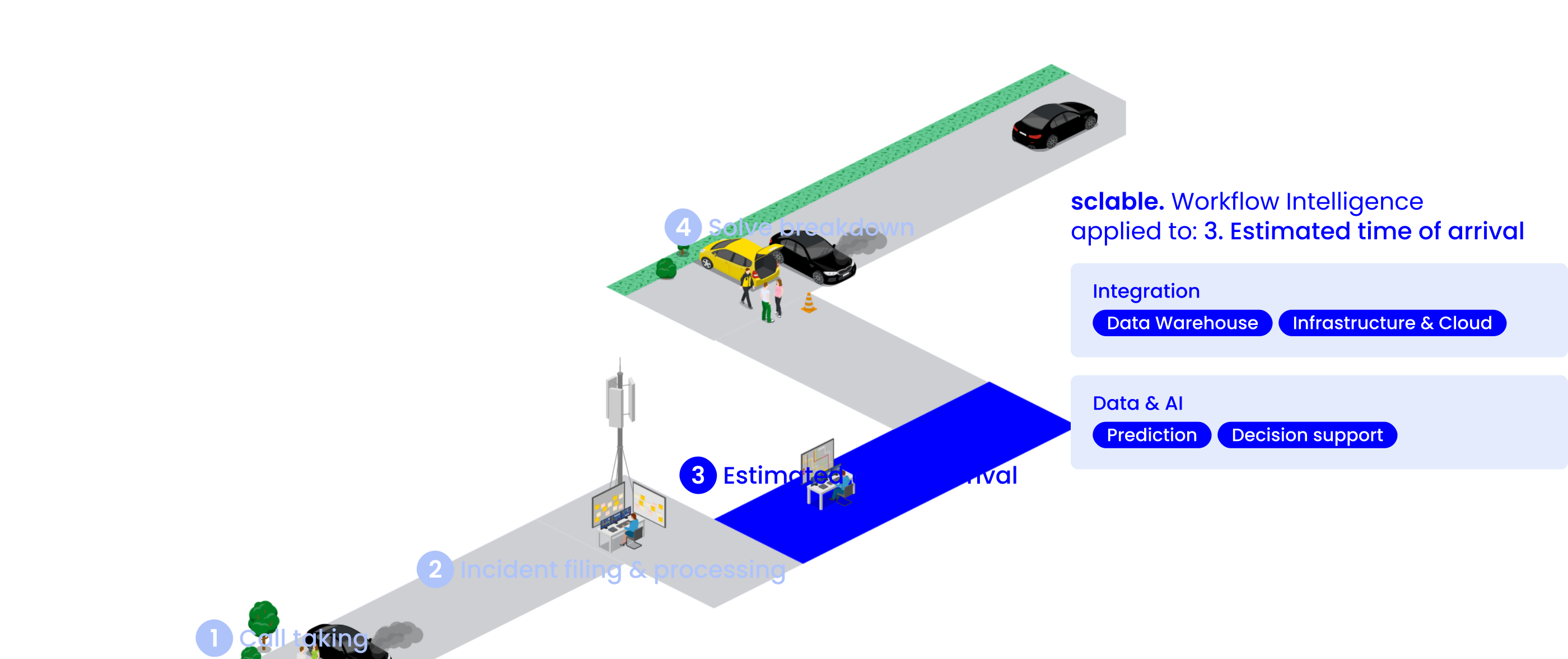
Our solution
Together with ÖAMTC, we developed an AI model to predict waiting times more accurately. We deliberately focused on a specific subprocess to deliver fast, tangible results without disrupting the overall system.
Following a successful proof of concept, the solution moved into live operations. Additional real-time data was collected to continuously improve model performance. A dedicated dashboard ensures full transparency at all times.
What we achieved together
Prediction accuracy
More precise waiting time forecasts enable better-informed members.
Fleet efficiency
Planning and execution of roadside operations became more efficient.
Transparency
Model performance is visible in real time through dashboards.
Process understanding
Operational workflows and key data drivers became more transparent.