Global Agri-Processor From fragmented data to AI-powered purchasing decisions
Food & Agri-Processing
Global Food Ingredients Group
Workflow Intelligence,
Data Science,
Custom Software Development
The prices of agricultural commodities change quickly and do not move in straight lines. There are various factors involved, for example geopolitical shocks or extreme weather, which no one can predict. With regard to other factors, such as energy prices, transport costs and past price behaviour, there are patterns which repeat regularly enough to be of use.
Data-driven forecasting belongs to the second type, since it does not aim at eliminating uncertainty from procurement but rather provides buyers with a more clear basis for making decisions when under pressure.
Our partnership
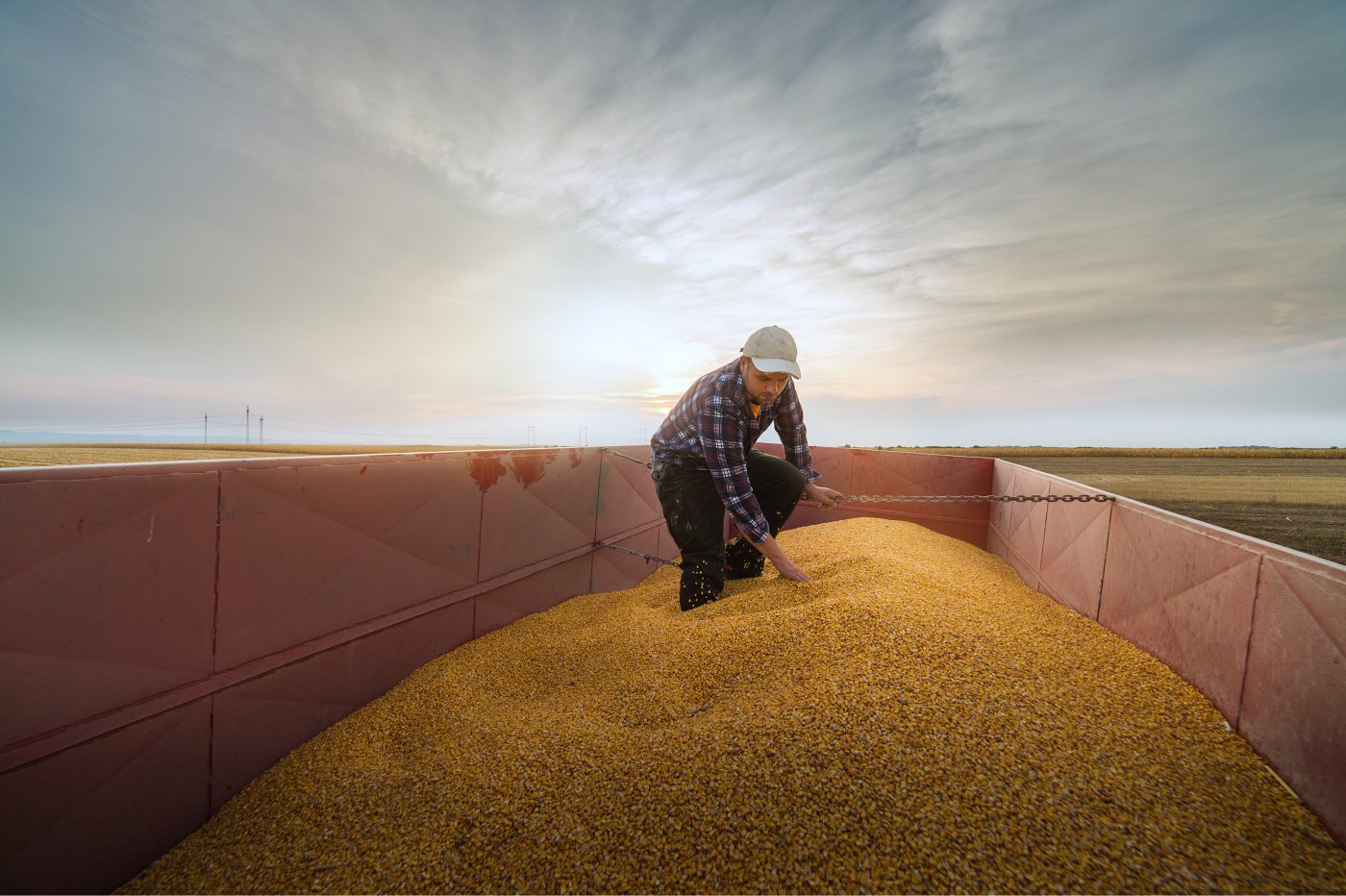
Our client is one of Europe’s largest food ingredients producers, operating across more than 50 production sites in over 25 countries. Their teams source raw materials from dozens of markets simultaneously, each with its own price dynamics, seasonal patterns and supply chain pressures. At that scale, a poor purchasing call is a costly one.
The challenge
Commodity prices in the food industry are among the hardest inputs to manage. Weather, harvests, energy costs and logistics all influence prices in ways that resist straightforward forecasting.
The procurement team was making decisions from fragmented data spread across multiple sources, with no shared view of what was driving prices. Knowledge sat with individuals rather than the organisation. When one person held the picture, consistency across the team suffered.
The team needed a reliable directional signal grounded in the factors that actually move prices, rather than an exact price forecast, to give everyone a clear, shared view of where prices were heading and why.
Workflow Intelligence in action
The solution
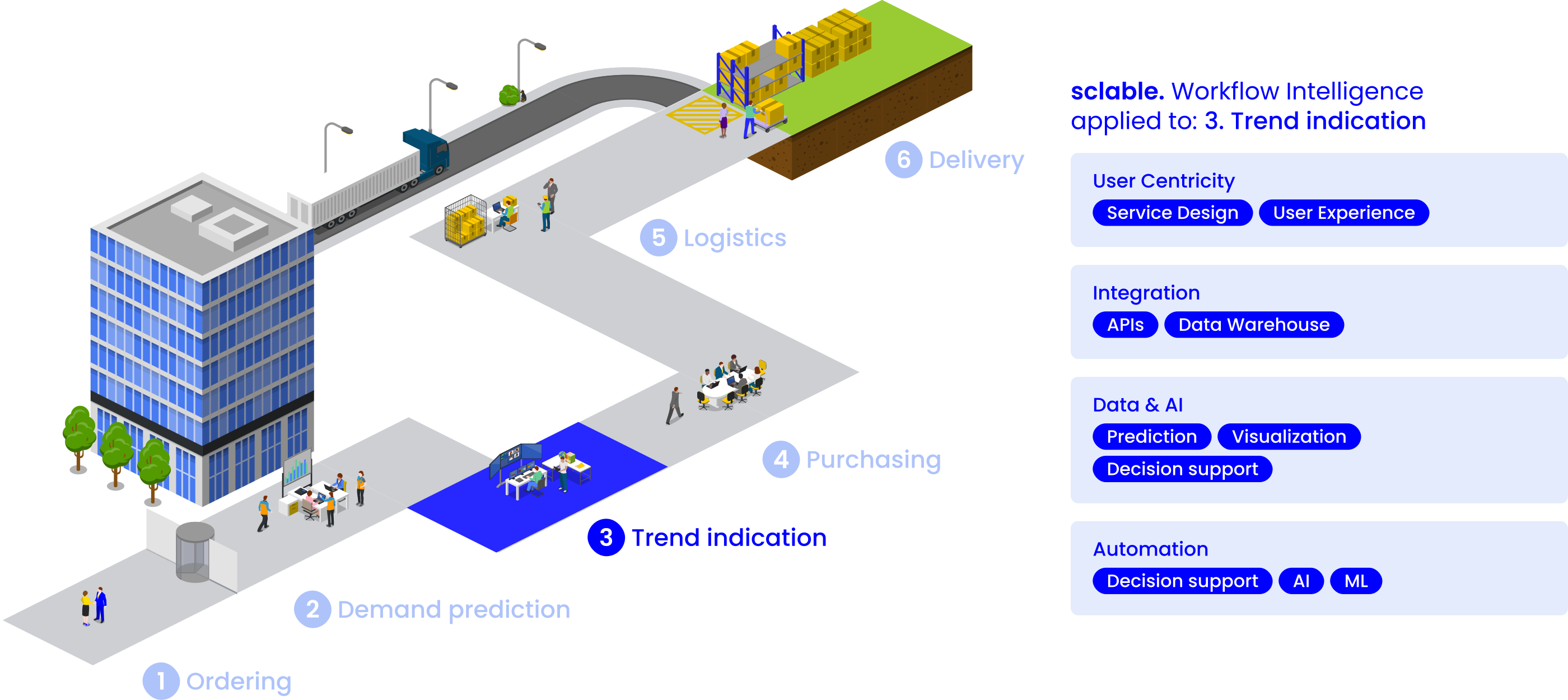
We built a Purchaser Cockpit, a platform that brought data management, trend modelling and visual decision support together in one place. Grounded in Workflow Intelligence, the solution connected human expertise, machine learning and a system-wide view of how purchasing decisions get made.
Human-centered: The cockpit was designed around how buyers actually work. It supports judgment rather than replacing it, and makes the reasoning behind decisions visible to the whole team.
Technology-driven: We developed a machine learning model trained on historical price data and a curated set of leading indicators, including energy prices and transport costs. Multiple models were benchmarked against known outcomes. The model identifies directional trends rather than exact price points, and explainability was built in from the start so buyers could always see which factors were influencing the output.
System-wide: Scattered data sources were consolidated into one view. Decisions that had lived with individuals became team conversations, and purchasing knowledge became an organisational resource rather than a personal one.
What we achieved together
Decision transparency
Purchasing decisions moved out of individual silos and into shared team conversations.
Unified data view
Price indicators, market signals and trend data were brought together in one coherent interface for the first time.
Price trend modelling
A machine learning model delivered directional price signals, rising or falling, based on proven correlating factors.
Model validation
Tested against real outcomes, the model demonstrated meaningful predictive signal beyond baseline approaches.
Explainable AI
Buyers could see which factors were driving any given trend indication.
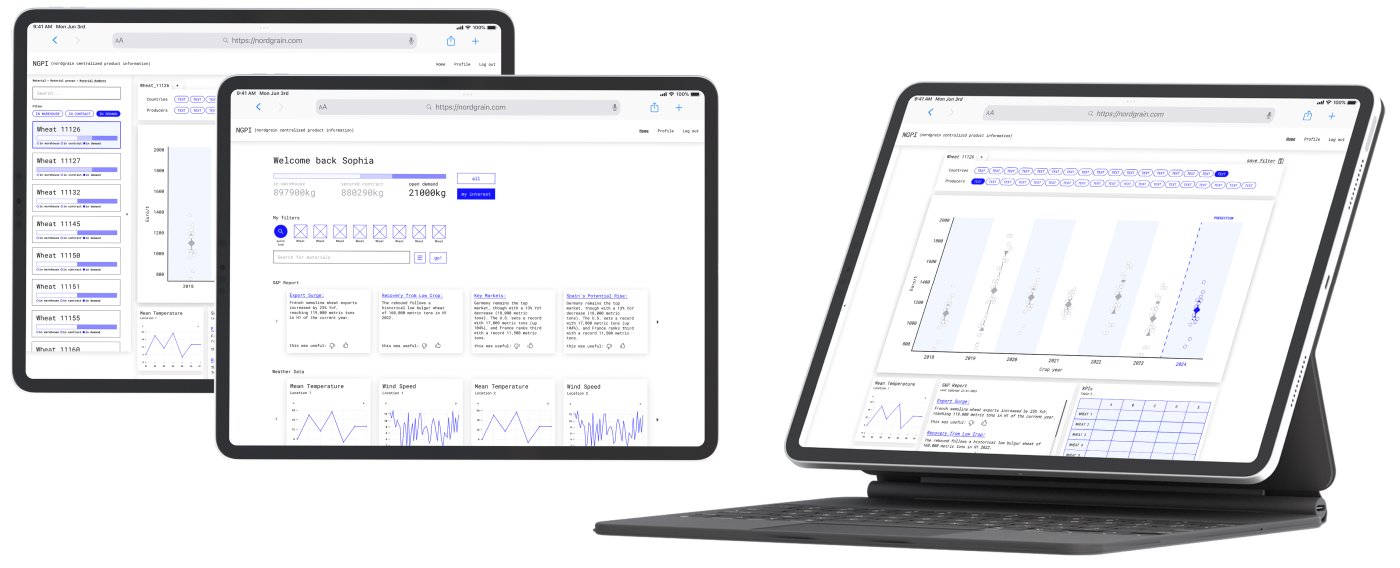
Wireframes for the buyer dashboard (l.) Filtering and displaying the analysis of selected raw materials (r.)